AI Literacy · Workshops for teams
Workshops on how to think about AI.
Three 90-minute workshops for companies whose teams already use AI tools every day — and want shared vocabulary for where the tools help, where they get in the way, and what to do with the difference.
01 · What this is
The quieter use of AI.
Most conversation about AI is about speed. These workshops are about something else — the slowness that pays off, and the moments where reaching for the tool is exactly the wrong move.
Each workshop pairs a single distinction — prediction vs. ambiguity, signal vs. sign, computational thinking vs. wisdom — with a live exercise your team takes into their work the next morning. No tool tour, no productivity tips, no prompt cheat-sheets. Vocabulary instead.
Built for teams that don't need to become technologists, but have noticed AI reshaping the terrain their work sits on — and want to name what they're seeing.
02 · The workshops
Three workshops. Ninety minutes each.
On-site or remote. Each stands alone; together they build a literacy your team shares.
Workshop №1 · Prediction
Prediction, ambiguity, and the limits of machines.
AI is, at heart, a prediction engine. It works beautifully when the future resembles the past and the problem has a right answer. It collapses where most creative and strategic work actually lives — in ambiguity: questions of taste, judgment, framing, what to make next.
This workshop hands your team a working framework for telling prediction problems from ambiguity problems, and includes a live Fermi-estimation exercise that makes the difference visceral in five minutes.
Workshop №2 · Language
Signal and sign. Why machines can't be smart.
This workshop goes one layer deeper than the first — not what AI does, but how we communicate with it and what it actually is. The Jennifer Aniston neuron, the distinction between signal and sign, and a speak-and-draw exercise that shows in five minutes what is lost when a sign becomes a signal.
Your team leaves with a daily literacy practice for catching themselves in the moment of accepting a signal in place of a sign.
Workshop №3 · Computational thinking
When computational thinking slows you down.
The longest of the three, and the most substantive. We walk down Cortada's ladder of data, information, knowledge, and wisdom; through Koestler's bisociation as a definition of creativity AI cannot satisfy by design; and the holarchy that contains every creative act.
Includes the Levels of Specificity exercise — a drawing tool teams keep using long after the workshop ends.
03 · How it works
Two formats.
Each workshop runs ninety minutes. Two ways to bring it in:
On-site. Up to twenty people. NYC included in the base fee; elsewhere with travel. Materials and the exported artifact included.
Remote. Zoom, up to thirty people. Same exercise, asynchronous follow-up. Works well for distributed teams.
Pricing scales with format and team size. Get in touch for a proposal within two business days.
- Where AI is powerful. Where it falls apart. And the difference your judgment makes.
- AI is fluent. It sounds like it understands. Fluency and understanding are not the same thing.
- A 90-minute workshop on the kinds of slowness that pay off.
Bring it in-house
Bring AI Literacy
to your team.
Tell Nitzan about your team — its size, where you are, and which of the three workshops feels most useful right now. He'll come back with a proposal within two business days.
Most teams using AI have learned to move faster. Fewer have learned where speed is making their work flatter. These workshops give your team shared vocabulary for both — and a few moves they can use the next morning.
Formats
In-person · NYC
90 minutes
Up to 20 people. Your office or Index Greenpoint. Includes materials.
Remote
90 minutes
Zoom, up to 30 people. Same exercise, asynchronous follow-up.
Quarterly retainer
Series of four
Themed sessions across a quarter. Best for teams adopting AI in production.
Nitzan replies with a proposal within two business days.
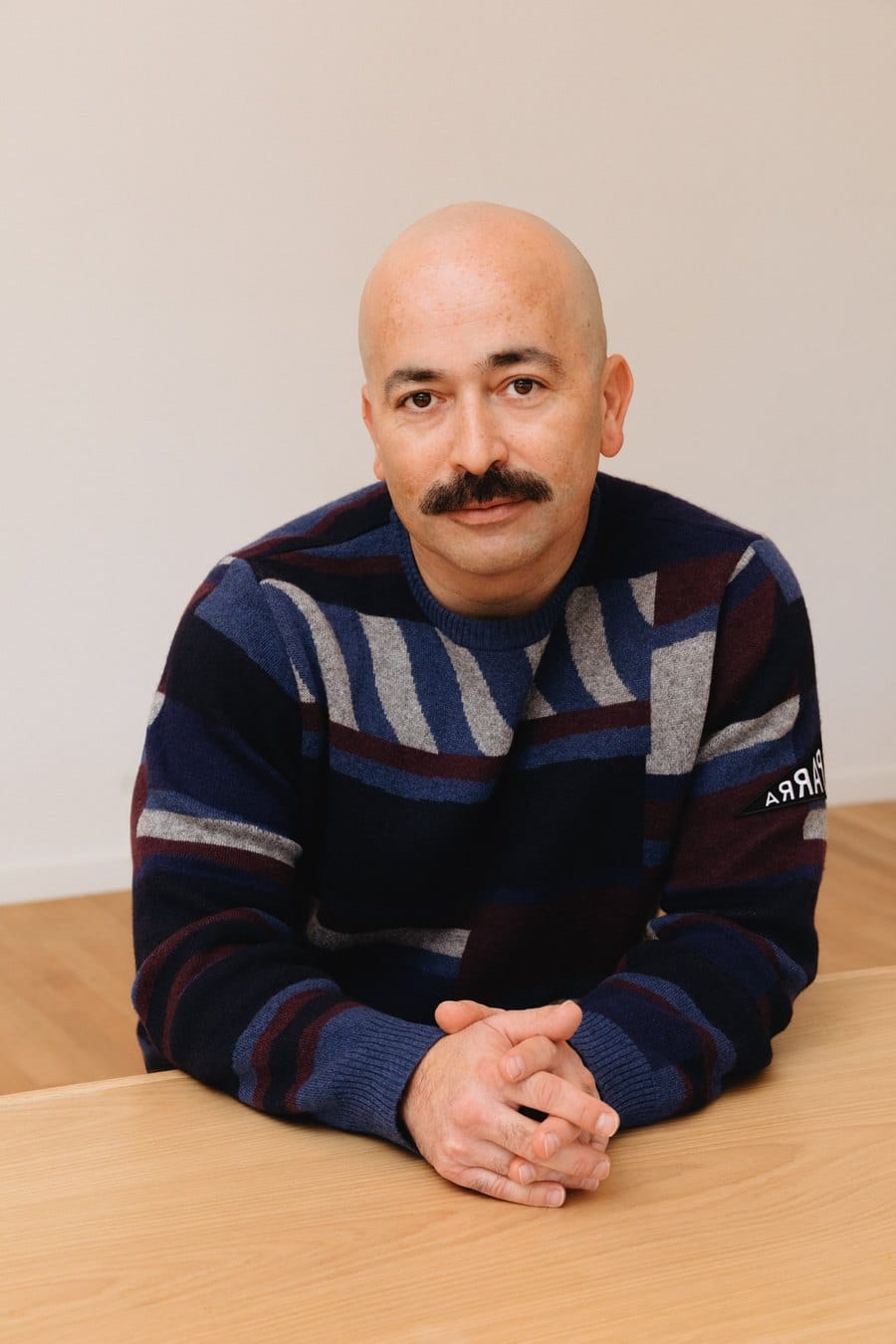
Your instructor
Nitzan Hermon
Coach, writer, and educator. Founder of Critical Business School, a meta-disciplinary design school in Greenpoint, New York City.
Nitzan's work sits at the intersection of creative practice and business — helping individuals and organizations articulate what they actually do, what they're for, and what to build next. He has spent years translating between technologists and the people who have to live with what they build, and has been paying close attention to what AI is changing about how creative people work.
He writes the Critical Business School newsletter, on creative surplus.
Produced by Critical Business SchoolInquiries Email Nitzan