Craft is a Conversation
Value is utility plus aesthetics. Craft is how the specific enters it.
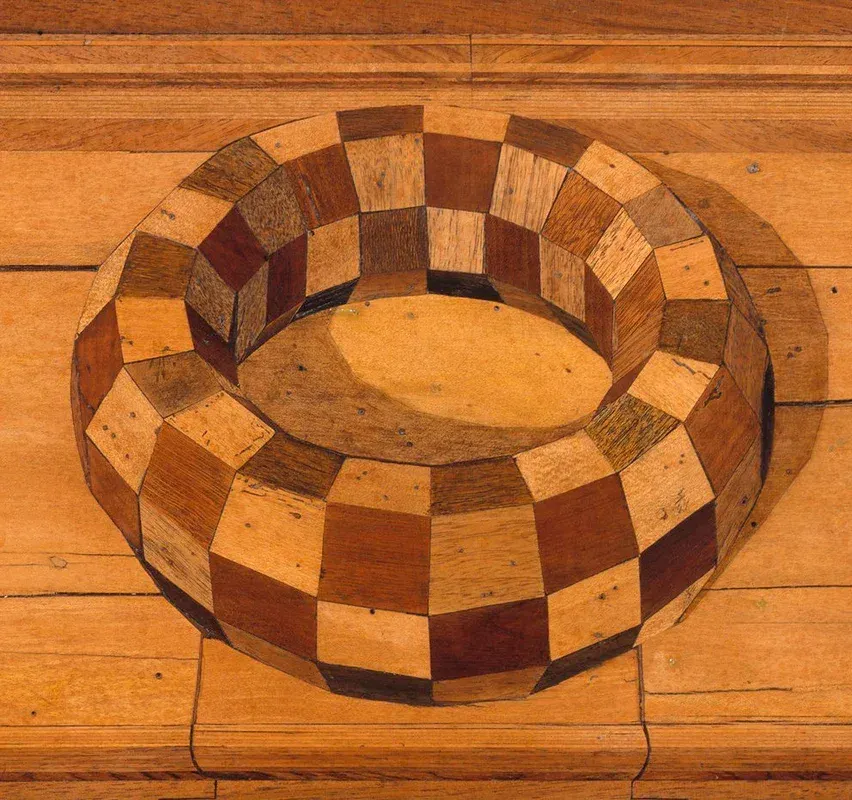
Craft is embodied, synchronous communication with material.
Embodied, because the knowing happens in the hand before it reaches language. Synchronous, because the material answers back in real time and the answer changes what you do next. Communication, because something passes in both directions and both sides are altered. Material, because it has its own grain and its own resistance.
To see why this matters now, start with what work is worth.
Value is utility plus aesthetics
Every piece of work carries two kinds of communication at once.
Utility is the general part. It is what the work does for anyone: the chair holds weight, the essay explains, the deck gets the decision made. Utility is transferable. It can be specified in advance, measured, compared, and averaged. That is why it can be described briefly and executed by someone else.
Aesthetics is the specific part. It is the accumulation of choices that could only have come from one person in contact with one material at one moment. Why this joint and not that one. Why the sentence stops where it stops. It cannot be specified in advance, because it doesn't exist until the choices are made.
Utility without aesthetics stays utility. It can be competent, efficient, and correct, and still mean nothing. Aesthetics without utility drifts into decoration. Value is the sum, and the two terms are produced in completely different ways.
The general travels; the specific doesn't
Utility survives transmission. You can write it down, hand it off, store it, scrape it. It works the same whether it was made today or ten years ago, by you or by anyone. Utility is asynchronous by nature.
Aesthetics only forms in synchrony. You develop it by being affected, in real time, by the consequences of your own choices. The wood tells you you're against the grain. The wall of the pot thins under your fingers. A word in a sentence sounds louder than the others half a second after you type it. You register it, the registering becomes part of you, and the next choice is made by a slightly different person. That loop is the only place specificity comes from.
So the definition does a precise job. Craft is the mechanism by which the specific enters value. It is how aesthetics gets added to utility.
What the clone was missing
When I met a version of myself trained on my content and my voice, it reproduced the utility of my writing remarkably well. The vocabulary was right. The arguments were recognizable. What came back was the general term minus the specific term.
That's what training on artifacts gets you. An artifact is the transcript of a conversation with material. It carries the utility intact and carries the aesthetics only as a trace. A model can learn the shape of the replies. It was never asked anything by the material, so it has nothing to reply with.
Models are averaging machines. They are excellent at the general term, because the general term is exactly what averaging preserves. They converge on the specific term by removing it.
Where the scarcity went
For most of history, utility was expensive. Producing a working thing took skill, time, and access, so those who could produce were the ones who got paid.
Now the general term is nearly free. Anyone can generate a passable image, essay, or deck. When utility costs nothing, it stops differentiating, and value concentrates in the term that can't be generated: aesthetics. As I wrote in The Same Tools, In Different Hands, the bottleneck has moved from the hand to the eye.
One step further: the eye is trained by the hand. You learn to see by having touched. Someone who has never been in synchronous contact with a material has nothing to compare it to, so the tool's defaults quietly become their taste. Their work keeps its utility and loses its specificity, and the baseline drifts toward the probable.
Automate the general, stay in contact with the specific
This is the core of AI literacy: separate what is general in your work from what is specific. Automate the general. Put language on the specific.
Craft is embodied, synchronous communication with material. This week I invite you to consider your craft, how you communicate it, and what your material is.